Overview
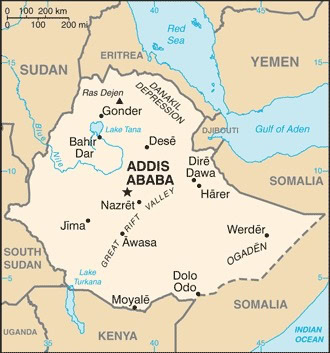
Ethiopia is a country with a very long, written history. Christianity was embraced in the region, known as the Kingdom of Aksum, as early as the fourth Century. Today it is the second most populous country in Africa (after Nigeria) and since the secession of Eritrea in the 1990s it is the largest landlocked country in the world, by population.
The beginnings of modern Ethiopia are often traced to the reign of Emperor Tewodros II who, in the 19th Century, unified the regions of the country into a cohesive state. A successor, Menelik II, established the modern borders. Ethiopia, along with Liberia, managed to defend itself from European colonialism in Africa, but from 1936 to 1941 it was occupied by the forces of Fascist Italy. Full sovereignty was restored in 1944.
In 1974 a Soviet-backed military junta deposed long-standing Emperor Haile Selassie and imposed Marxism on the country. Regional uprisings and severe famines eventually contributed to the downfall of President Mengistu, who sought asylum in Zimbabwe in 1991. Eritrea, along the northern coast, gained its independence from Ethiopia in the early 1990s, following 30 years of guerrilla warfare. However, the border between the two countries continues to be a cause of tension and a fresh, two-year war broke out in 1998.
Ethiopia is a multi-ethnic country and Christianity is the largest religion, with about 60% of its population identified as Christian. The biggest church is the Ethiopian Orthodox. Evangelicals constitute about 18% of the population.
What it means to be a Christian in Ethiopia
Ethiopia’s constitution provides for freedom of religion and worship and the government generally protects the rights of Christians. Most Christians in the country worship freely, although Evangelicals sometimes face pressure to join more traditional churches. Converts from Islam face threats of violence, particularly in Muslim-majority areas of the country.
Persecution
Despite Christianity being the largest religion in the country, there are parts of Ethiopia where Christians face violent persecution. In the south of the country political unrest and the rise of Wahhabism have resulted in attacks on Christians. Similarly, in the east of the country, in areas with people from a Somali background, Christian converts can face persecution, both from their families and communities. Those who seek to share the gospel with Muslims face particular threat. In some areas Church-owned property, including churches, have been destroyed; believers beaten and some killed.
In this century many persecuted Christians from Eritrea have fled over the border into Ethiopia, ending up in refugee camps. These camps came under further pressure in 2021, following the outbreak of a new civil war in the northern Ethiopian region of Tigray.
Release International work
Release is supporting the training of frontline workers, both in a mission school close to Addis Ababa and local training in a variety of locations across Ethiopia. These frontline workers are from tribal groups who are largely unreached and therefore those who come to faith and particularly those who are reaching out are likely to risk retribution from within their community.